
Home» Trademarks for Sale» UK Trademark» Class 22 - Ropes /Fibres» QIPO
QIPO®
UK Trademark FlagUK TrademarkClass 22 - Ropes /Fibres✓ Registered
Jurisdiction
UK Trademark
Nice Class
Class 22 - Ropes /Fibres
Serial No.
UK00004080613
Registration No.
UK00004080613 View live status on the official site↗
Assignment Type
Entire interest and the goodwill
Domain
Not included
Ownership VerifiedListed by the direct legal owner with ownership verified.
Registered & CleanIn good standing, free of disputes and litigation.
Managed TransactionIPSKU manages the transaction from inquiry to closure.

Goods & Services

UK Trademark ● Class 22 - Ropes /Fibres
Dog, rabbit and alpaca hair for stuffing or padding purposes; Acrylic fibers; All-purpose nylon straps; All-purpose nylon straps featuring hook and loop fasteners; All-purpose straps comprised of synthetic textile materials [excluding artificial leather]; All-purpose tarpaulins of plastic; Alpaca hair; Anchoring ropes; Angora goat hair; Angora hair; Animal feeding nets; Animal hair; Arrays of resilient plastic straps that may be arranged in prescribed angular orientations relative to each other to accommodate objects of different sizes, shapes and configurations in any one of a multiplicity of different arrangements; Artificial hair for stuffing and padding purposes; Awnings comprised primarily of tensile fabric membranes; Awnings for vehicles of textile or synthetic materials; Awnings of textile; Awnings of textile or synthetic materials; Bags for composting kitchen, garden, and other organic material; Bags for securing valuables; Bags for washing hosiery; Bags specially adapted for holding rope; Baling twine; Bamboo fiber; Banister ropes; Bank deposit bags; Bath toy organizers in the nature of net bags secured by suction cups; Bed tents; Belts, not of metal, for handling loads; Binding twine made of natural textile fibres; Bivouac sacks being shelters; Body bags; Bottle envelopes of straw; Brattice cloth; Bungee cords; Bungie cords; Burlap wraps for plants; Cables, not of metal; Camel hair; Camouflage nets; Camouflage nets for radar use; Camouflage nets for visual and radar uses; Camouflage nets for visual use; Canopies comprised primarily of tensile fabric membranes; Canopies of textile or synthetic materials; Canvas bags for laundry [not for luggage or travel]; Canvas bags for storage of food, grain, not luggage or travel bags; Canvas canopies; Canvas tarpaulins; Canvas wraps for plants; Car towing ropes; Carbon fibers for textile use; Carbon fibres for textile use; Carded wool; Cargo and carrier equipment for vehicles comprised of synthetic textile materials, excluding artificial leather, namely, tow ropes, tow straps, ratchet tie-down straps, quick release tie down straps, lashing straps, and tarp straps; Cargo slings of rope or fabric; Cattle hair [not for textile use, not for brushes]; Chemical fiber bags for industrial use; Chemical fiber nettings; Chemical fibers for textile use; Climbing ropes; Cloth bag for storing and dispensing plastic bags for household use; Cloth bags for laundry [but not luggage or travel]; Cloth bags for stacking and storing diapers and blankets; Cloth bags for storage [but not luggage or travel]; Cloth bags specially adapted for the storage of diapers; Clothes pin storage bags; Clothesline; Coarse animal hairs; Coconut fiber; Coconut fibers; Coconut fibre; Cocoons; Combed wool; Commercial fishing nets; Commercial nets; Concrete curing blankets made of textile; Cord; Cordage; Cordage made of hemp; Cords for hanging pictures; Cords made of textile fibres; Cotton bags for industrial use; Cotton batting for futon; Cotton batting for use in quilts and clothing; Cotton fibers; Cotton netting; Cotton tow; Cotton wadding for use in quilts and clothing; Cotton waddings for clothes; Cotton waste; Cushioning not of rubber, plastic or paper in the nature of stuffing; Disposable bulk container liners; Down feathers; Down feathers for stuffing material; Down feathers for use as stuffing; Drop cloths; Dust sheets; Eiderdown [feathers]; Elastic bands for binding; Elastic bands for securing rolled garments for travel; Elastic netting for meat products; Esparto grass; Fabric and polyester mesh net used for storing toys and other household items; Fabric cabanas; Fabric mailing pouches; Fabric wadding for water filtering; Feathers and downs; Feathers for bedding; Feathers for stuffing; Feathers for stuffing upholstery; Fiber rovings for textile purposes; Fiberfill; Fibers for the manufacture of gut for rackets and fishing; Fishing nets; Flax fiber [raw]; Fleece wool; Flexible and portable plastic bag for carrying gasoline or other liquid petroleum fuels; Flock for stuffing; Floss silk; Garden nets [tarpaulins]; Garment bags for storage; Garment bags for storage of sweaters, shoes and scarves. General utility bags for commercial use; Glass fiber netting; Glass fibers for textile use; Glass fibres for textile use; Groundsheets; Grow tents; Guy lines not of metal; Hammocks; Hanging mesh net used for storing sports balls; Heavy-duty bags for disposal of building materials and refuse; Heavy-duty bags for recycling and disposal of building materials; Heavy-duty bags for recycling and disposal of building materials, namely roofing shingles and bricks; Hemp fibers; Hemp fibres; Hemp for textile use; Hemp nettings; High-density polyethylene plastic bags for the storage of household items; Horsehair, not for textile use and not for brush-making;

Transaction Process

A simple, secure four-step journey — from agreement to ownership, fully managed by us.

STEP 01 - Agreement & Signature
Prepared by us. Signed by both parties.
After confirming the details with both the buyer and the seller, we prepare the formal Trademark Assignment Agreement and coordinate signing by both parties. This agreement is the foundation of the transaction and is required to complete the trademark assignment.
STEP 02 - Invoice & Payment
Pay your way. Funds stay protected.
Upon execution of the agreement, the buyer makes payment to the IPSKU's regulated account via PayPal, Escrow.com or bank wire transfer. IPSKU securely holds the funds until the trademark transfer is complete and the buyer confirms receipt, then releases the funds to the seller.
STEP 03 - Assignment & Transfer
Filed within 2 business days. Receipt provided.
Within two business days of receiving payment, we file the assignment with the relevant trademark office, pay the official fees, and provide the buyer with the Assignment Filing Receipt. Where applicable, we also coordinate the transfer of associated domain names.
STEP 04 - Approval & Closure
Confirmed, handed over, paid out.
When the Assignment Recordation Notice arrives, we forward it to the buyer and confirm that the trademark and any associated domain names have been transferred. Once the buyer confirms the handover, we release the funds to the seller and the transaction is complete.
Managed end-to-end by IPSKUEscrow funds released after handover & confirmationOfficial receipt & approval notice provided100% refund guarantee if transfer cannot complete

Estimated Transfer Time

Based on our recently completed recordals at the relevant trademark office.

1–2weeks

United Kingdom · UKIPOTypical time from filing the assignment to the official recordation notice. It varies with the office's current workload.

Other trademark offices
European Union · EUIPO2–4 weeks
Australia · IP Australia2–4 weeks
New Zealand · IPONZ2–4 weeks
Switzerland · IPI2–4 weeks
Hong Kong · IPD4–6 weeks
Korea · KIPO4–8 weeks
Japan · JPO6–10 weeks
United States · USPTO8–10 weeks
Canada · CIPO8–10 weeks
Brazil · INPI8–10 weeks
Mexico · IMPI8–10 weeks
India · CGPDTM12–24 weeks
China · CNIPA16–24 weeks

Buyer Must Read

Please review these key points before completing your purchase.

❖ 3 Key Actions for New Owners Post-Transaction:

❶ Keep using the trademark in commerce.
Using your trademark in commerce is essential for its protection, validity, distinctiveness, and reputation. Regular, genuine use maintains its legal significance and boosts brand recognition and consumer trust. If not, your mark risks cancellation for non-use, weakened legal protection, and loss of brand value.

② Designate a new correspondent for your trademark.
The trademark correspondent is the primary contact for official communications. Usually, the owner's attorney holds this role and manages legal matters. As the new owner, we recommend appointing your own trusted trademark attorney as correspondent, so you receive all official communications promptly and your mark is properly monitored. If not, you risk missing critical notices and deadlines, which could put your trademark rights at risk.

Under USPTO rules, U.S. owners can set themselves as the trademark correspondent in their USPTO.gov account and receive official emails directly. It takes minutes, and we provide buyer with a step-by-step guide.
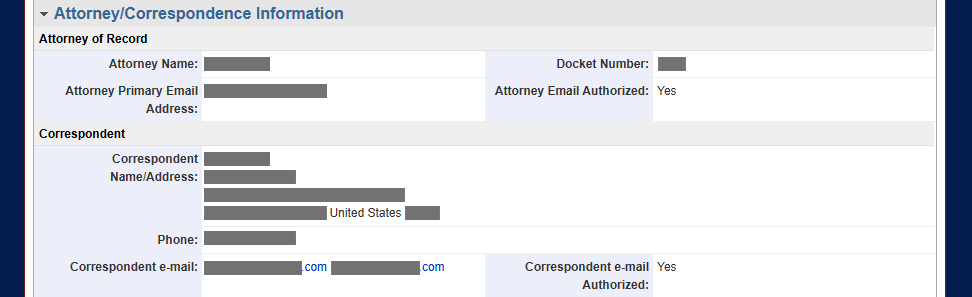
Trademark Correspondence

③ Renewal and Maintenance.
As per official rules, trademarks require ongoing renewal and maintenance to remain valid and enforceable. You must track your trademark's deadlines and submit required documentation on time. If not, your registration will be canceled by the relevant trademark office.

For U.S. trademark owners: check your trademark status and maintenance deadlines via the USPTO's TSDR system (https://tsdr.uspto.gov), and submit all required filings and fees on time to keep your registration active.
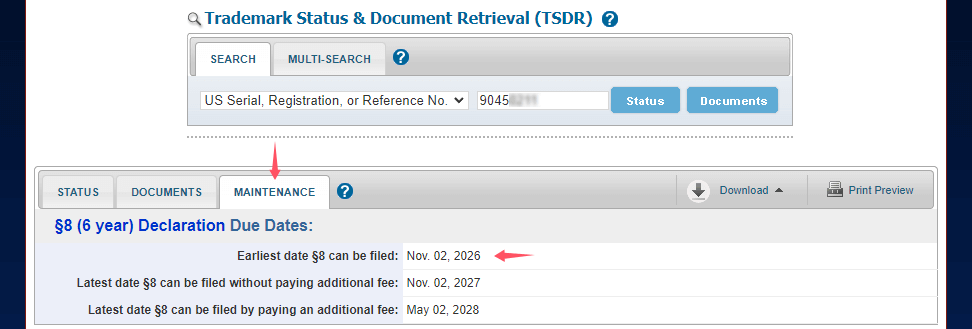
Trademark Maintenance

PeriodWhen to FileWhat to File
First Ten YearsBetween 5th & 6th year after registrationDeclaration of Use (or Excusable Nonuse)

Between 9th & 10th year after registrationDeclaration of Use (or Excusable Nonuse) + Application for Renewal
Successive Ten-Year PeriodsBetween 9th & 10th year of each periodDeclaration of Use (or Excusable Nonuse) + Application for Renewal
❖ About Trademark Ownership Transfer

◆ What is the process for transferring ownership?
For a U.S. trademark, we submit the required forms, the executed Trademark Assignment Agreement, and fees to the USPTO. Officials review the filing and record the transfer if everything is correct; if errors are found, they notify us to make corrections until the transfer is approved.

◆ What will the buyer receive as a result of the ownership transfer?
The buyer will obtain trademark ownership, entire interest and the goodwill.
In this process, we will provide the buyer with the Assignment Filing Receipt and Assignment Recordation Notice.

◆ What changes can we expect to see on the official page?
The USPTO system will record the assignment details and update the information to reflect the new owner.

◆ How long does the transfer take?
Typically 8–10 weeks after filing, depending on the USPTO's current workload.

❖ About Amazon Brand Registry

Application:
➜ After you file enrollment forms and submit the required files, a relevant "Case" will be created by Amazon in the "Case Log".
➜ If your submissions are qualified, Amazon will send an email including a "verification code" to the email address associated with the trademark representative.
➜ You will need to reply to the "Case" with the above-mentioned "verification code".
➜ Amazon will approve your brand registry if no mistakes occur.
(Guide of Amazon Brand Registry)

Benefits: 
◆ After the registry, you can create product listings with the brand.
◆ You get A+ Content, enhanced brand content, brand analytics and more.
◆ Amazon doesn't seem to care which class your trademark is in, they give you coverage across all categories (which could change at any time).

❖ About Domain Name Transfer

◆ An Auth-Code (also called EPP code, authorization code, transfer code, or Auth-Info Code) is a generated passcode required to transfer a domain name between registrars — it confirms the owner has authorized the transfer. GoDaddy.com and NameCheap.com are well-known registrars.

◆ Using the Auth-Code shared by the owner, you can transfer the domain to your registrar account seamlessly.

◆ Typical transfer time: 

Transfer type Typical time
Between different registrars 5–7 days
Between accounts within the same registrar Minutes or seconds

See Domain Transfer Between Registrars.

Asking price$1,900
Inquire Now
NICE Classification
Email Us
Back to Top
NICE Classification ✕
GOODS (Class 01–34)
Class 01 Chemicals: Chemicals for industry, science, and agriculture; unprocessed plastics and resins; fertilizers; fire extinguishing compositions; food preservation chemicals.
Class 02 Paints: Paints, varnishes, lacquers; preservatives against rust and wood deterioration; colorants; raw natural resins; metals in foil and powder form for painters and decorators.
Class 03 Cosmetics: Bleaching and cleaning preparations; soaps; perfumery; essential oils; cosmetics; hair lotions; shampoos; toothpaste.
Class 04 Fuels: Industrial oils and greases; lubricants; dust absorbing materials; fuels and illuminants; candles and wicks for lighting.
Class 05 Pharmaceuticals: Pharmaceutical and veterinary preparations; sanitary preparations; dietetic foods; baby food; dietary supplements; disinfectants; pest control preparations.
Class 06 Metal Materials: Common metals and their alloys; metal building materials; metal pipes; small metal hardware; safes; metal structures.
Class 07 Machinery: Machines and machine tools; motors and engines (except for vehicles); machine couplings and transmission components; agricultural machines; vending machines.
Class 08 Hand Tools: Hand-operated tools and implements; cutlery; side arms; razors.
Class 09 Scientific Instruments: Scientific, optical, measuring, signaling, and checking instruments; computers; software; eyewear; batteries; fire extinguishing apparatus.
Class 10 Medical Devices: Surgical, medical, dental, and veterinary instruments; prosthetics; orthopedic articles; medical apparatus; massage devices.
Class 11 Lighting & Heating: Lighting, heating, cooking, refrigerating, drying, ventilating, water supply and sanitary installations.
Class 12 Vehicles: Vehicles and transportation apparatus for land, air, or water; automobiles; motorcycles; bicycles; aircraft; boats.
Class 13 Firearms: Firearms; ammunition; explosives; fireworks.
Class 14 Jewelry: Precious metals and alloys; jewelry; gemstones; watches and clocks; key rings and decorative ornaments.
Class 15 Musical Instruments: Musical instruments and their parts; music stands; instrument cases and accessories.
Class 16 Paper Goods: Paper and cardboard; printed matter; books; photographs; stationery; office supplies; teaching materials.
Class 17 Rubber Goods: Rubber, plastic, and insulating materials; packing, sealing, and insulating materials; flexible pipes.
Class 18 Leather Goods: Leather and imitations; luggage and bags; backpacks; umbrellas; walking sticks; pet clothing.
Class 19 Building Materials: Non-metal building materials; rigid pipes; asphalt; movable non-metal buildings; monuments.
Class 20 Furniture: Furniture; mirrors; picture frames; non-metal storage containers; decorative household items.
Class 21 Household Utensils: Household and kitchen utensils; combs and sponges; brushes; cleaning tools; glassware; cookware.
Class 22 Ropes & Tents: Ropes; nets; tents; tarpaulins; sails; sacks; padding materials; raw textile fibers.
Class 23 Yarns: Yarns and threads for textile use; sewing threads; embroidery threads.
Class 24 Textiles: Fabrics and textile goods; bed covers; table covers; household textile products.
Class 25 Clothing: Clothing; footwear; headwear; scarves; belts; gloves; socks.
Class 26 Lace & Embroidery: Lace; embroidery; ribbons; buttons; zippers; wigs; hair accessories; artificial flowers.
Class 27 Carpets: Carpets; rugs; mats; linoleum; wallpaper; non-textile wall hangings.
Class 28 Toys & Sports: Toys; games; sporting goods; amusement equipment; fishing tackle; playing cards.
Class 29 Meat & Dairy: Meat; fish; poultry; preserved fruits and vegetables; eggs; milk products; edible oils.
Class 30 Coffee & Bakery: Coffee; tea; cocoa; rice; flour; bread; pastry; honey; condiments; spices.
Class 31 Agricultural Products: Agricultural and horticultural products; grains; fresh fruits and vegetables; live animals; animal feed.
Class 32 Beverages: Beers; mineral and aerated waters; non-alcoholic beverages; fruit drinks; energy drinks.
Class 33 Alcoholic Drinks: Alcoholic beverages except beer; wines; spirits; liqueurs; cocktails.
Class 34 Tobacco: Tobacco; smokers' articles; cigarettes; cigars; electronic cigarettes; lighters and matches.
SERVICES (Class 35–45)
Class 35 Advertising: Advertising; business management; marketing; retail services; office functions; accounting.
Class 36 Financial Services: Insurance; financial affairs; banking; real estate services; brokerage.
Class 37 Construction: Building construction; repair and installation services; maintenance services.
Class 38 Telecommunications: Telecommunications; broadcasting; data transmission; email services; online forums.
Class 39 Transport: Transportation; packaging and storage of goods; travel arrangement; logistics services.
Class 40 Material Processing: Treatment and processing of materials; custom manufacturing; printing services; waste treatment.
Class 41 Education: Education; training; entertainment; cultural and sporting activities; publishing services.
Class 42 Technology Services: Scientific and technological services; software design; IT services; website development.
Class 43 Food & Accommodation: Food and drink services; restaurants; cafés; hotels; temporary accommodation.
Class 44 Medical Services: Medical; veterinary; hygiene and beauty care services; agriculture and gardening services.
Class 45 Legal Services: Legal services; security services; social and personal services.